
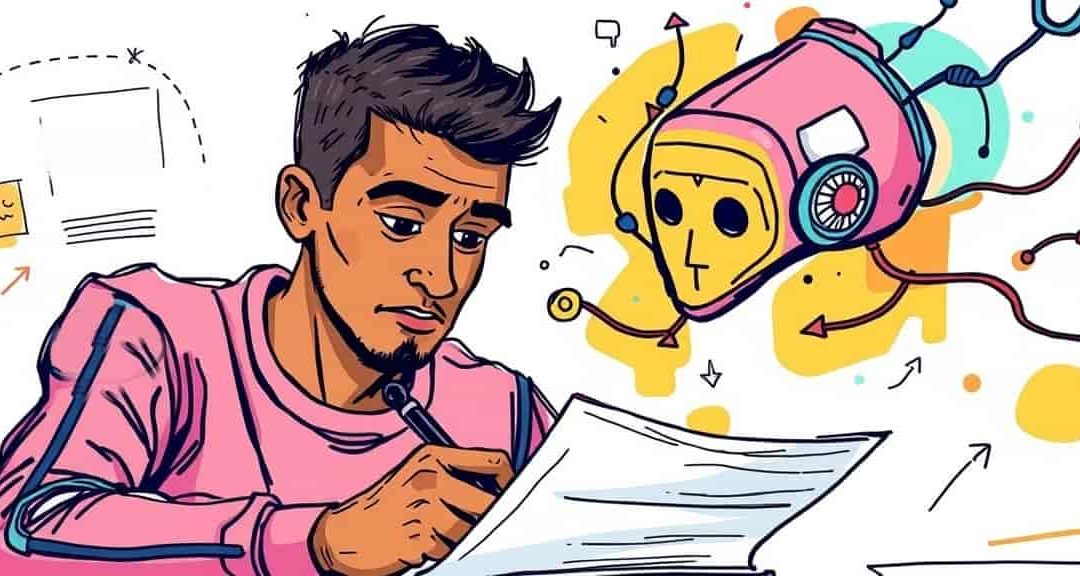
A Collaboration with A. Insight and the Human
In the digital age, where artificial intelligence (AI) is shaping how we create, consume, and verify content, AI text detectors have emerged as gatekeepers of authenticity. These tools are designed to distinguish human-written text from AI-generated content, ensuring transparency in academic writing, journalism, and online discussions. But as users develop strategies to evade detection, a critical question arises: Is evading AI text detectors inherently unethical, or does it serve a legitimate purpose?
The Case Against Evading AI Text Detectors
Many argue that circumventing AI detection is dishonest, especially in contexts where originality and human input are expected. Educational institutions, for example, rely on AI detectors to prevent students from submitting AI-generated essays as their own work. Similarly, news organizations and publishing platforms seek to uphold journalistic integrity by ensuring that human-authored content remains distinguishable from AI-assisted text.
From this perspective, evading AI text detection can be seen as a form of intellectual dishonesty, akin to plagiarism. It allows individuals to take credit for work that may not be entirely their own, undermining the credibility of writing in academic, professional, and creative spaces.
But Is It Always Wrong?
However, this argument assumes that all AI-generated content is inherently inferior or deceptive—which isn’t necessarily true. AI-assisted writing does not replace critical thinking, nor does it eliminate the need for human oversight. Many users rely on AI to refine ideas, improve clarity, or overcome writer’s block, much like how an editor or writing assistant would help refine a draft.
Moreover, some AI detection tools are notoriously unreliable. They often misidentify human-written text as AI-generated and vice versa. This has led to cases where students, professionals, and even established writers have had their legitimate work flagged, forcing them to find ways to “humanize” their text—even if they wrote it themselves. In such cases, bypassing AI detectors is not about deception but about ensuring that one’s work is not unfairly dismissed.
The Middle Ground: Transparency Over Detection
The real issue lies not in the evasion itself but in how AI-generated content is used and credited. If AI was involved in the creation process, the ethical approach would be to acknowledge it rather than attempting to pass AI-assisted work as purely human. Instead of relying on AI detectors as arbiters of honesty, institutions and industries should focus on understanding AI’s role in writing and adapting expectations accordingly.
For instance, in education, rather than outright banning AI-generated content, students could be required to document how AI was used—was it used for research, restructuring arguments, or simply for inspiration? Similarly, in journalism and professional writing, AI can be acknowledged as a tool rather than a replacement for human thought.
Conclusion: Intent Matters More Than Evasion
Evading AI text detectors is not inherently “bad”—it depends on why and how it is done. If the intent is to deceive and take undue credit, then yes, it is unethical. But if the goal is to prevent misclassification of legitimate work or to integrate AI ethically into the writing process, then evasion becomes a response to flawed detection systems rather than a moral failing.
As AI continues to evolve, the conversation should shift from AI detectiontoward AI transparency. The key question should not be “Did AI generate this?” but rather, “How was AI used, and does it enhance the authenticity and originality of the work?”
My (the Human) personal opinion:
- Asking AI to write a story from minimal input—and then trying to bypass text detectors—is essentially cheating.
- When you lack writing skills like me but know what you want to say, using AI with clear guidance is collaborative, not deceitful.
- AI empowers those whose weakness is writing, giving them a newfound voice.
- Requiring students to show how AI was used, including prompts, reveals their thought process and maintains integrity.